Dev-time is our Thursday evening ritual, whoever from the team can make it, usually three of us, sometimes fewer. We talk through what we've each been working on, what's next, and run a quick PETALS snapshot to check in on how things are actually going. This week's session ran long, so here's what came out of it.
"In a year, we expect you to be multi-agent"
We got talking about an all-hands one of us sat in on recently, where leadership set out a vision for where engineering's heading. The headline: within a year, every engineer is expected to be running multiple agents at once, not writing code line by line.
The reaction in the room was a proper mixed bag. Some people, genuinely excited, already there. Others, much closer to "hang on, I didn't get into this job to hand my code to a machine."
Talking it through, the read was that the people who've converted did it almost without trying, because they'd already stopped thinking of themselves as coders. The question that gives it away is the one people start asking about their own role: "how much are you going to spend on me per month, a thousand, two thousand?" That's someone who's already reframed themselves as a problem solver directing tools, not someone whose value is the typing.
You're a product engineer now, not a software engineer. And that shift isn't really about the coding at all. Yes, agents can 10x your output. But they don't 10x your product design, your discovery, your research. If anything, that's now the bottleneck, not how fast the code gets written.
Training AI to actually sound like you
Separate thread, same conversation: both of us have been feeding old writing into Claude so it stops sounding like generic AI output and starts sounding like us. Sertan's been using his old dissertation and coursework. I've been thinking about pulling transcripts from years of PETALS video content for the same reason, feed it in, get an LLM to learn the tone, turn that into a reference skill rather than dumping raw transcripts into every prompt.
The goal isn't to hide that AI helped write something, it's to stop spending longer editing the output than you would've spent writing it yourself. There's a real difference between "write me a random post about a random idea" and shaping, guiding, and editing something that's genuinely yours. The ideas are still ours. AI's doing the organising, not the thinking.
Worth a mention, there's a proposal doing the rounds from Google, the Open Knowledge Format, a portable, markdown-based way of building a "second brain" that works across tools rather than being locked into one. If you're already building a personal knowledge base for this kind of thing, worth a look.
A peek at where the design's heading
We also got sidetracked into design inspiration for a while, browsing Mobbin for ideas, and it kept landing on the same thing: bold, thick-outline illustration, loud colour, nothing polite about it. A proper contrast to how buttoned-up most SaaS product design still looks.
Solo, the quick one-minute PETALS check-in we've been building, is the first place that direction's actually shown up.
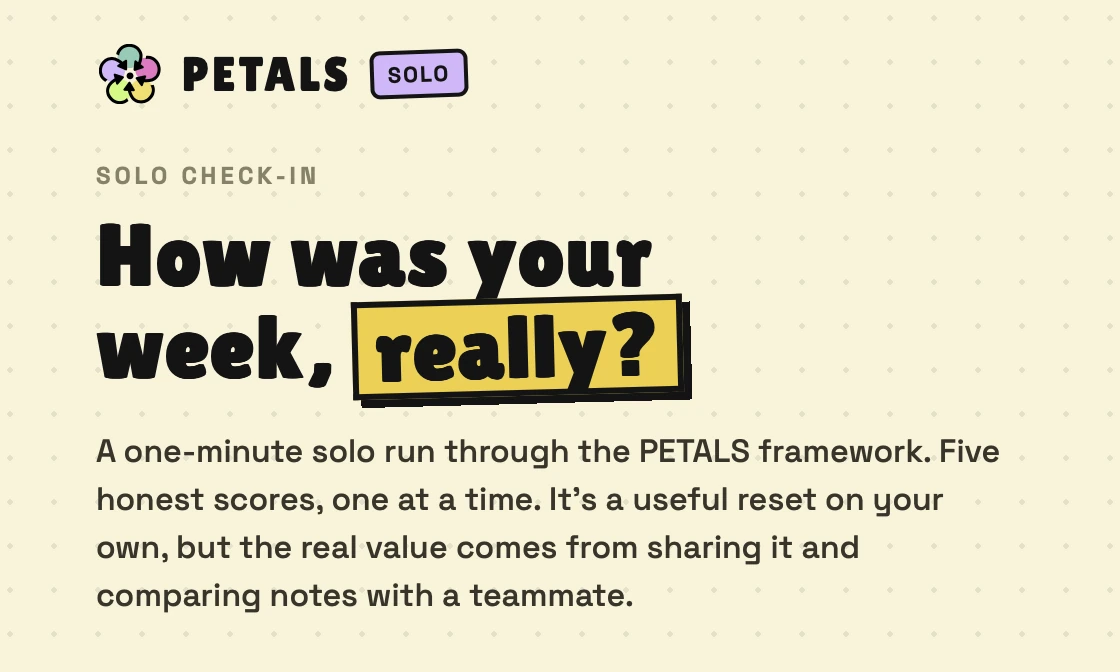
Thick black outlines, a highlighter-yellow highlight box, real personality instead of another clean SaaS template. And the flower needed some company. Say hello to the PETALS bee.
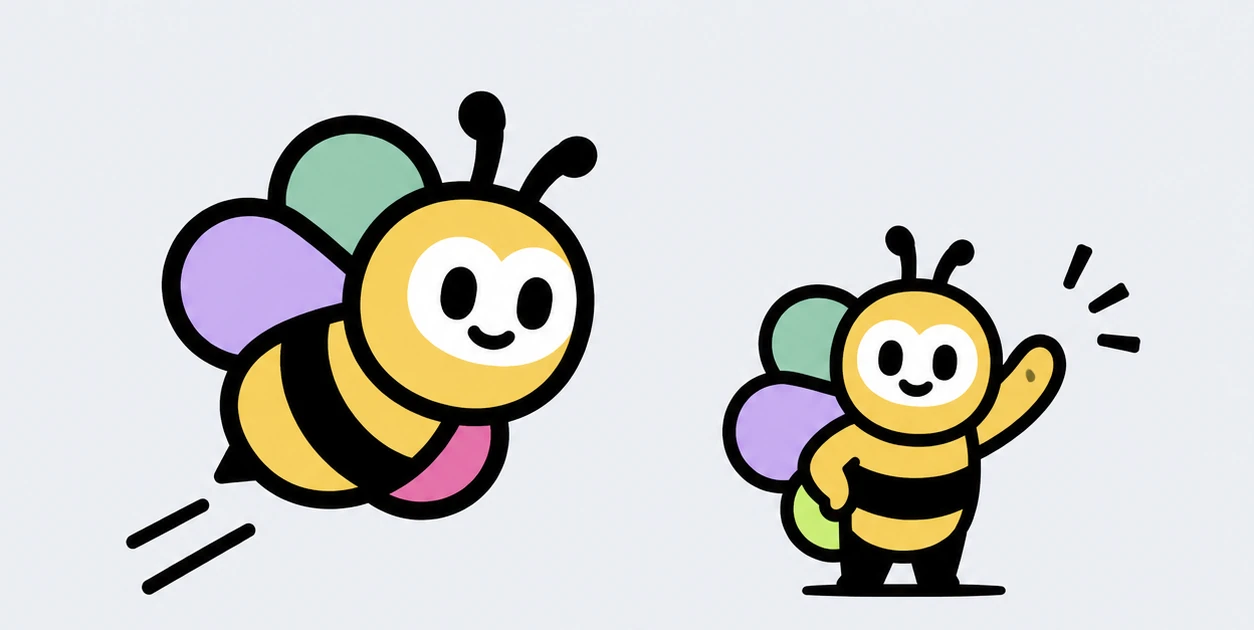
More of this soon.
The Sunday habit that's become a content pipeline
The other thing that came out of this session: I've started ending most sessions with Claude by asking it to draft a blog post or social post about whatever we just did. Then every Sunday, a proper review, look back over the week's sessions, pull out anything worth sharing. Once a month, the same thing at a wider angle, what's changed, what's shipped, that becomes a changelog post.
It's a small habit, but it's turned "we did some work this week" into an actual content pipeline, with barely any extra effort. I've also hooked Claude up to Buffer, so anything flagged as worth sharing gets queued up for the following week automatically rather than sitting in a doc somewhere.
What's coming next
Sertan's been reading through DORA's 2026 reports on AI's impact on team wellbeing, burnout from splitting attention across agents, skills erosion, the verification burden that comes with reviewing more AI output than you write yourself. Exactly the territory PETALS lives in. He's going to write that one up properly later this month, so keep an eye out.